

Dietary Fiber Write for Us

Dietary Fiber Write for Us: Fiber is found principally in plant foods such as fruits, vegetables, whole grains, and legumes. It is perhaps best known for its ability to prevent or relieve constipation. But fiber-rich foods also have other health benefits. They help preserve a healthy weight and reduce the risk of diabetes, heart disease, and approximately types of cancer. Choosing delicious, fiber-rich foods is easy. Find out how much fiber you need, which foods contain it, and how to add it to your meals and snacks.
What is dietary fiber?
Dietary fiber is a type of nutrient known as carbohydrate. Fiber includes the parts of herbal foods that the body cannot digest or absorb. This distinguishes it from nutrients such as fats, proteins, and other carbohydrates, including arrowroots and sugars. The body breaks down and absorbs these nutrients. Fiber, on the other hand, passes virtually intact through the stomach, small intestine, and large intestine to be excreted from the body.
There are two main types of fiber:
Soluble fiber. This type of fiber dissolves in water. In the abdominal, it forms a gel-like substance that slows digestion. It can help lesser cholesterol and blood sugar. Soluble fiber is found in oats, peas, beans, apples, bananas, avocados, citrus fruits, carrots, barleycorn, and fleawort.
Insoluble fiber. This type of fiber does not liquify in water. It helps move food through the digestive system and increases stool bulk. Therefore, it can be helpful for people who suffer from constipation or have irregular bowel movements. Good sources of inexplicable fiber include wheaten flour, wheat bran, nuts, beans, and vegetables such as cauliflower, lime beans, and potatoes.
Most fiber-rich plant foods contain both soluble and insoluble fiber. The amount of apiece type of fiber varies depending on the type of plant, such as a fruit, a vegetable, or a whole grain. However, you can get both types of fiber by eating a variety of fiber-rich foods.
How much fiber do you need?
The National Academy of Medicine mentions the following daily fiber intake for adults:
- 21 grams for women over 50.
- 25 grams for women 50 and younger.
- 30 grams for men over 50.
- 38 grams for men 50 and younger.
- Benefits of a High-Fiber Diet
- A high-fiber diet can promote health in several ways.
- High Fiber and Lower Risk of Constipation
Dietary fiber adds weight and bulk to stools, as well as softening them. In general, bulkier stools are easier to pass, which reduces the risk of constipation. If you have loose, watery stools, fiber can help make them firmer. This is because fiber absorbs water and adds bulk to stools.
High Fiber and Low Cholesterol
Soluble fiber, found in beans, oats, flaxseed, and oat bran, can prevent the body from absorbing some of the cholesterol from other foods. As a result, this can reduce blood levels of low-density lipoproteins, also recognized as “bad” cholesterol. High-fiber foods may also have other heart-healthy effects, such as reducing blood pressure and inflammation.
Blood Sugar and Fiber
In people with diabetes, fiber can slow the absorption of sugar and help regularize blood sugar levels. This is especially true for soluble fiber. A healthy diet that contains both soluble and insoluble fiber may also reduce the risk of developing type 2 diabetes.
Healthy Weight and Fiber
High-fiber foods tend to be more satisfying than low-fiber foods. Therefore, you’re likely to eat less and feel fuller for longer. High-fiber foods also tend to last longer and are lower in calories than low-fiber foods. This means they have fewer calories for the same amount of food.
High-Fiber Diets and Life Expectancy
Consuming more fiber has been linked to a lower risk of dying since any disease, including heart disease.
Best Sources of Fiber
Nutritious foods that can help you consume more fiber daily include:
- Whole grains, such as barley, bulgur, brown rice, and whole-wheat bread or pasta.
- Fruits.
- Vegetables.
- Beans, peas, and other legumes.
- Nuts and seeds.
- Refined or processed foods often contain less fiber. The process of refining grains removes the outer hull, called bran. This reduces the amount of fiber and other nutrients in the grain.
Examples of refined scraps include white bread, pasta, and cereals not made with whole grains. Additionally, removing the skin of fruit or the pulp from fruit juice reduces the fiber content. Fortified foods contain some B vitamins and iron after processing, but not fiber.
How to Submit Your Articles?
To write for us, you can pitch us at contact@divinehealthblogs.com
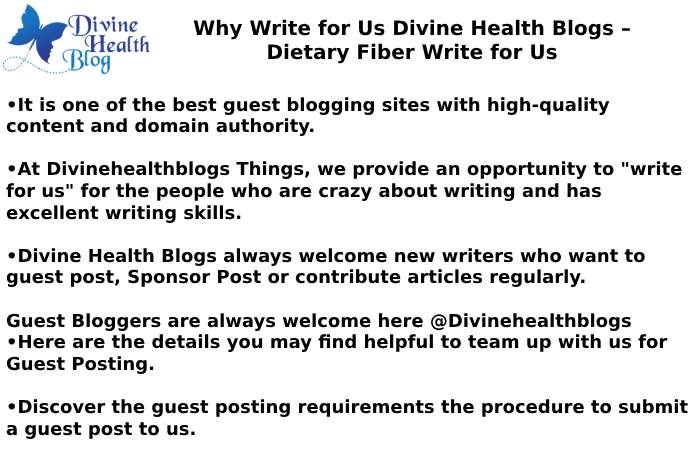
Why Write for Us Divine Health Blogs – Dietary Fiber Write for Us
Search Terms Related to Dietary Fiber Write for Us
- dietary fiber “write for us”
- fiber nutrition “submit a guest post”
- “write for us” + nutrition blog
- healthy diet “write for us”
- high fiber foods “guest post”
- “submit an article” + dietary tips
- nutrition tips “write for us”
- wellness blog “write for us” + fiber
- “contribute” + healthy eating blog
- whole grains “guest post submission”
- “submit a post” + digestive health
- gut health blog “write for us”
Search Terms for Dietary Fiber Write for Us
- submit an article
- all health care write for us
- write for us fitness
- beauty guest post
- write for us lifestyle
- “write for us” + “health”
- “write for us” + beauty
- health care blog write for us
- write for us health and beauty
- write for us healthcare
- healthcare guest post
- medical write for us
- “write for us” + “beauty”
- health guest post submission
- write for us + health and beauty
- write for us health blog
- guest post on healthcare
- health & wellness write for us
- contribute to health blog
- health blog guest posting
- “health guest post” + “write for us”
- “medical guest post” + “write for us”
- “fitness guest post” + “write for us”
- “nutrition guest post” + “write for us”
- “wellness guest post” + “write for us”
- Health + Write for Us
- Health Blog + Write for Us
- Health and Wellness + Write for Us
- Healthcare + Write for Us
- Medical + Write for Us
- Health and Fitness + Write for Us
- Mental Health + Write for Us
- Wellness + Write for Us
- Nutrition + Write for Us
- Alternative Medicine + Write for Us
- submit a guest post on health
- how to contribute to a health blog
- guest post guidelines for health blogs
- write for us health tips and wellness
- accept guest posts health and lifestyle
- contribute fitness and nutrition articles
- write for us mental health and well-being
- healthcare guest post opportunities
- best health blogs accepting guest posts
- health and skincare guest posting
- write for us + mental health
- write for us mental health paid
- health and wellness write for us
- health and beauty write for us
- write for us +health
- health blog write for us funding
- write for us health and fitness
- write for us health uk
- write for us + health
- health and fitness write for us
- health write for us
- write for us health
- health + write for us + guest post
- health+write for us
- health blog write for us
- write for us + health and fitness
- health blogs write for us
- mental health write for us
- write for us health and wellness
- write for us + health 2022
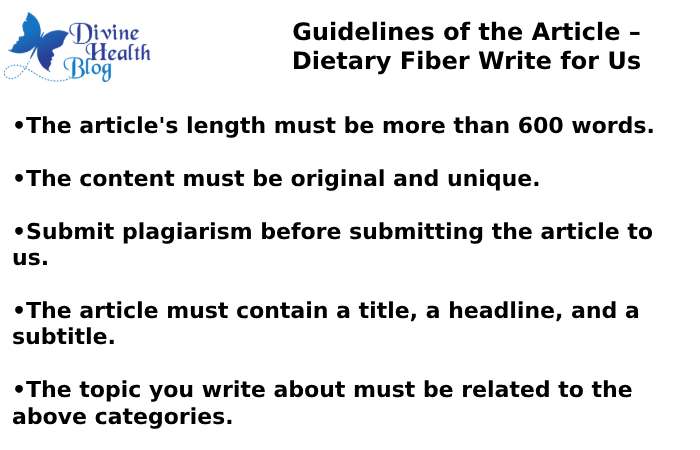
Guidelines of the Article – Dietary Fiber Write for Us
 You can email us at contact@divinehealthblogs.com