

Stress Relief (the awareness that comes from paying attention to each moment without judgment) has become a popular wellness practice for dropping stress and improving overall health. But like any habit, mindfulness must be practiced regularly to fully reap its benefits. Here, experts from our network of health centers offer some simple exercises you can start today to develop your mindfulness practice and enjoy all its benefits.
Swim or float
- Swimming engages the entire body without putting stress on your joints.
- Moving through tense or contracted areas can significantly reduce physical tension. It increases mobility and allows more oxygen to flow to muscles we use less frequently.
- Swimming naturally helps you find a breathing rhythm, helping you find your own swimming style.
- Being immersed in water helps eliminate distractions, allowing you to become more aware of your inner state.
- If Stress Relief doesn’t give you energy, try floating and focus on how your body moves through the water as you breathe.
Meditative Walking (Core Walking)
- Breathing, body, and mind are interconnected. When we can slow down our movements and breathing, the mind will naturally follow.
- Movement helps us better focus on what we’re trying to accomplish.
- When walking, the body moves forward, creating a powerful momentum. By slowing down and reducing momentum, we begin to use the stabilizing muscles to maintain an upright posture.
- Strengthening these small abdominal, or core, muscles can relieve long-term body pain and help maintain balance.
- There are many aspects to focus on during meditative walking, such as relaxed breathing or even weight distribution on each leg.
- Or perhaps focus on moving your shoulders, without bouncing. This is a good indicator that you’re engaging in deeper, more complete abdominal breathing, rather than shallow chest breathing.
- Good places to meditate while walking include a flat stretch of beach, a hallway, or even taking a few laps around your living room. Simply try to eliminate as many distractions as possible.
A Cup of Tea
- Any action can be an exercise in mindfulness if you take the time to practice it.
- Take a moment to observe the brew, the aroma, the way your hands rise as you carry it to your lips, and the warmth that spreads through your body.
- Slowing down while sipping tea or another hot beverage will not only help you focus, but will also quiet your internal dialogue.
Hiking or Connecting with Nature
Nature is the perfect place to disconnect from technology and become more aware of your senses.
The crunch of greeneries underfoot, the scent of plants, and birdsong can send signals to your nervous system to relax.
Contemplative Meditation
- Choose an external object, such as a rush flame, the horizon, or a campfire. Let your gaze gently rest on that point and become fixed.
- This can be a great way to begin practicing mindfulness with your eyes open. (Blinking is okay.)
- Once you overcome the urge to look away, the ability to meditate and be mindful is enhanced and can provide a noticeable shift toward a more balanced and calm state of mind.
Guided Meditation
There are many guided meditations to choose from. This option is ideal for an evening or any time you simply want to listen and let yourself be carried away by what is happening.
Guided meditation, such as yoga nidra, allows the body to relax, yet remain conscious and alert, creating space for deep inner healing and stress release, and training the mind for meditation.
Stretch
- Approach your body’s movements more consciously with gentle stretches.
- Instead of forcing your muscles to flex and move, try creating space in your body for the breath to flow freely and create internal expansion.
- For example, with your spine straight, tilt your head to one side and allow your breath to flow into the tense areas of your neck, one breath at a time.
- Try to balance your breathing as you do this. If you pant for a count of four, exhale for a count of four.
Breathing Techniques
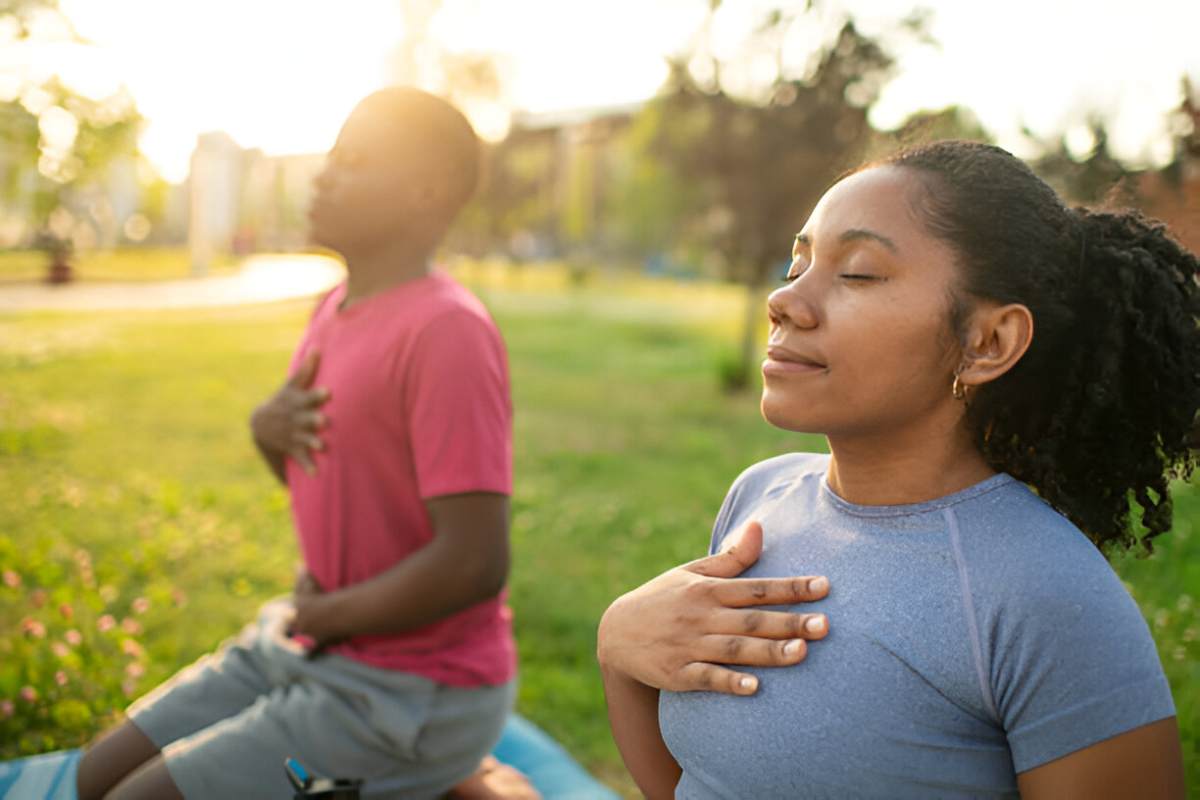
One of the simplest and most effective ways to practice mindfulness and calm the nervous system is to focus on your breathing. Stress Relief This helps your breathing become fuller and deeper, stimulating the parasympathetic nervous system, which sends signals to the body to relax.
Breathing techniques help us become more aware of where our breath is going and intensify sensations. Try dividing your breathing into three stages: first filling the lower abdomen, then the ribs, and finally the chest. Adding imagery to this technique can help make your breathing more fluid and smooth. Imagine a wave touching through your body in rhythm with your breathing.
- Set a timer for a few minutes and try it.
- When you feel yourself drifting off, return to your practice and observe your calm breathing.
- Mindfulness is a skill we can all develop with practice.
- Find an activity you enjoy and give it your full attention.
- Over time, your thoughts will begin to distract you. The key is to return to the practice without judgment and following your intention.
Conclusion
Stress Relief Mindfulness is a influential and accessible tool for managing stress in our increasingly busy and distracted lives. By learning to be present in the present moment without judgment, we create the space to respond to stress thoughtfully rather than impulsively. Techniques such as mindful breathing, body scanning, meditation, and mindful movement (like yoga or walking) have been systematically proven to reduce anxiety, lower blood pressure, and improve overall emotional well-being. Practicing mindfulness doesn’t require expensive equipment or hours of free time; just a few minutes of mindful attention each day is enough. Stress Relief Whether you’re a beginner or an experienced meditator, joining these approaches into your daily routine can help you develop resilience, emotional balance, and a healthier response to life’s adversities. Remember: mindfulness is a practice, not self-improvement, and even small steps can lead to long-term change.
Frequently Asked Questions
What is mindfulness?
Stress Relief Mindfulness is the practice of paying full attention to the present moment without judgment. It involves calm and accepting awareness of your thoughts, feelings, body, and surroundings.
How does mindfulness help with stress?
- Mindfulness helps reduce stress by:
- Reducing cortisol (the stress hormone)
- Improving focus and emotional regulation
- Promoting relaxation and better sleep
- Reducing negative thought patterns and reactivity
What simple mindfulness techniques can I try?
- Beginner-friendly techniques:
- Deep breathing: Focusing on slow, controlled breathing
- Body scan meditation: Noticing physical sensations from head to toe
- Watchful walking: Paying attention to each step and your surroundings
- Gratitude practice: Reflecting on the positive moments of your day
- 5-4-3-2-1 Grounding: Using your five senses to focus
How often do you need to practice mindfulness for it to work?
Even 5-10 minutes a day can make a difference. Consistency is more important than duration. Over time, regular practice builds resilience and reduces baseline stress levels.
Can mindfulness replace therapy or medication for anxiety or stress?
Although mindfulness is effective, it is not a substitute for professional treatment in severe cases. It works best as a balancing practice alongside therapy, medication, or other medically recommended treatments.
Is meditation necessary to be mindful?
No. While meditation is a common form of mindfulness, one can also be mindful when eating, walking, listening, or performing everyday activities, simply by being fully present and focused.
Is mindfulness a religious or spiritual process?
Mindfulness has its origins in the Buddhist tradition but is now widely trained in a secular, evidence-based way. It is used in healthcare, education, and mental wellness programs around the world.
Also Read: Modern Stress-Relief Trends: Exploring What’s Right for You