

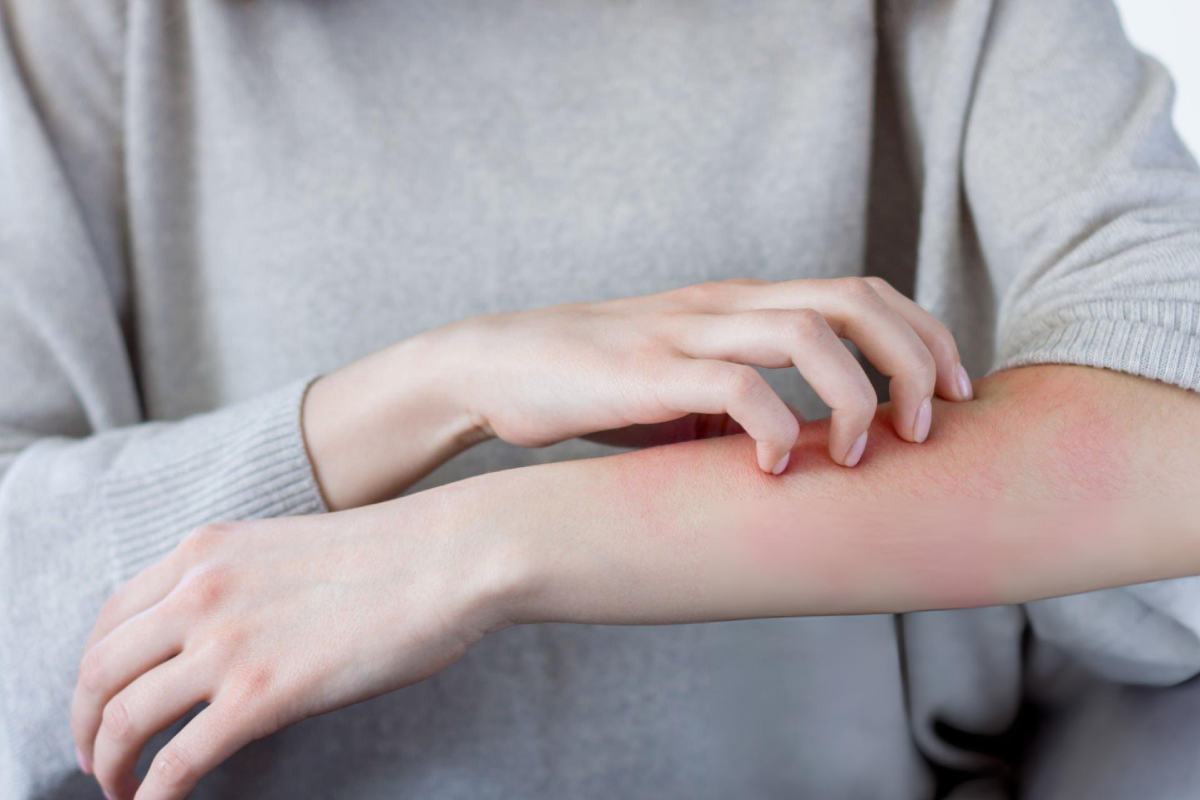
Heat Rash In Adults: medically known as miliaria, is common in warm climates with high humidity. Although children and infants are more susceptible to miliaria, it can affect people of all ages and genders. There are a few leading causes of heat rash in adults. Depending on its type, this type of rash can be inflammatory or non-inflammatory. In this article, we discuss the causes, types, and symptoms of this issue, along with the heat rash treatment and management options available for adults. Keep reading!
What Is Heat Rash?
Heat rash, also known as eccrine miliaria, prickly heat, and sweat rash, is a common skin issue that occurs when the eccrine sweat glands and ducts are blocked.
Eccrine sweat glands, which are found in the skin all over, produce most of the body’s sweat. When these sweat glands are blocked, the sweat produced is sent back into the dermis or epidermis layer of the skin, causing a heat rash under the skin.
Causes Of Heat Rash
Medical Conditions
Type 1 Pseudohypoaldosteronism is a condition in which excessive sodium is released from the body, leading to sodium deficiency. One way sodium is released is through the sweat glands. This condition has been associated with a type of miliaria known as rubra.
A rare autosomal recessive disease known as Morvan syndrome also leads to hyperhidrosis (excessive sweating), which may cause heat rash.
Medications
Certain medications can cause your body to sweat excessively, leading to heat rash. Bethanechol, clonidine, and neostigmine have been known to cause miliaria. In some cases, isotretinoin may also cause heat rash.
Bacteria
Bacteria like Staphylococcus epidermidis may cause blockages in the eccrine glands. These bacteria form biofilms that clog the glands, causing sweat to seep into the epidermis or dermis. This leads to overhydration, swelling, and further blockage of ducts. If left unmanaged, it can lead to the rupture of these glands and ducts.
General Causes
Tight clothes, strenuous physical activity, and drug patches may also cause blockages in the eccrine sweat glands. Excessive sweating leads to overhydration of the stratum corneum, which in turn leads to blockages. It is also common to sweat excessively in hot and humid conditions.
Some ducts become dilated under pressure and eventually rupture, which causes sweat to clog the skin. In some cases, UV ray exposure may damage epidermal cells, leading to duct rupture.
Different Types Of Heat Rash (Miliaria)
Miliaria Crystallina: This type of heat rash occurs when the ducts of the stratum corneum (outermost layer of the skin) are blocked. They form vesicles (minor liquid blockages) in the ducts.
Miliaria Rubra: This type of heat rash occurs due to a blockage in the ducts of the epidermis at the subcorneal layers (the layer below the topmost layer of the skin). Spongiosis (spaces in the skin that mimic a sponge) may form, leading to blockages. Inflammation around the blocked ducts can also occur.
Miliaria Profunda: Blockages in the papillary dermis (between the dermal and epidermal layers) lead to this type of heat rash. It may also cause spongiosis of the eccrine duct, similar to miliaria rubra. It leads to the rupture of the eccrine duct paired with significant inflammation.
Symptoms Of Heat Rash
The rash appears mostly in areas that sweat a lot, like the neck, chest, and back.
Miliaria crystallina appears as 1 to 2 mm superficial vesicles on the skin. The vesicles look like water droplets about to erupt. The rash usually occurs within a few days of exposure to a trigger and resolves within a day after the superficial layer of skin sheds.
Miliaria rubra is the most prevalent form of miliaria and may exhibit large red papules and vesicles. If pustules are present, then miliaria rubra is called miliaria pustulosa. It may be a risk factor for secondary bacterial infections and lead to inflammation, such as pain and itching, which could worsen because of sweat.
Miliaria profunda appears as firm, large, flesh-colored papules not centred around the follicles. These papules may be very itchy or not itchy at all.
Common symptoms to look out for include:
- Excessive sweating
- Clogged and sweaty skin
- Itching and redness
- Sponge-like spaces on the skin
- Sticky skin
- Burning sensation
- Blisters
Now that you know the causes and symptoms of heat rash, you can easily differentiate it from hives due to allergic reactions. Keep reading to learn how these types of heat rashes affect adults.
Heat Rash in Adults
Miliaria crystallina affects adults and infants younger than 2 weeks old. The most commonly affected sites are the upper trunk, neck, and head.
In adults, miliaria rubra is most likely seen in places where clothes rub on the skin, such as the trunk and extremities. The face is usually spared.
In miliaria profunda, the rash distribution in adults mainly involves the trunk, but the arms and legs may also be affected. The skin rash usually appears within minutes to hours of perspiration and resolves within an hour after you stop sweating.
Identifying miliaria requires a thorough clinical diagnosis. Please find out how it is diagnosed in the next section.
Diagnosis Of Heat Rash
In most cases, lab tests are inconclusive. However, dermoscopy is sometimes used to diagnose miliaria in people with dark skin. Some doctors may also recommend a skin punch biopsy to determine if you have a heat rash. However, a biopsy is rarely necessary for miliaria unless there is some scope for doubt.
It is important to get the right diagnosis from a doctor, as this condition may cause serious complications like anhidrosis (little to no sweat), which leads to heat exhaustion and decreased thermoregulation in the body. This could have a permanent effect on your health.
This skin condition also causes changes in the epidermal layer, which could lead to bacterial infections.
Some wonder if a heat rash can spread. The following section can offer more clarity. Continue reading.
Can A Heat Rash Spread?
As we saw, hot and humid conditions often trigger heat rashes and primarily affect areas where sweat becomes trapped in blocked sweat ducts. Although they don’t spread among people, they can spread across the body. If left unaddressed, they can extend to adjacent skin regions as the underlying sweat ducts clog. Hence, it is crucial to keep the affected areas cool and dry.
It is key to manage and treat a heat rash on time. The next section provides some treatment and management options you should follow to avoid and reduce heat rash.
Treatment And Management Options
Miliaria crystallina usually resolves on its own within 24 hours. The treatment for miliaria rubra focuses on reducing inflammation. Mild to mid-potency corticosteroids, like triamcinolone 0.1% cream, may be prescribed for one to two weeks.
In some cases, miliaria rubra may lead to miliaria pustulosa, which is the formation of pustules. These pustules are most commonly sterile and non-infective. However, secondary infections with Staphylococcus aureus may occur. Topical antibiotics, such as clindamycin, may be prescribed in those cases. Combining oral isotretinoin (40 mg daily) for 2 months and topical anhydrous lanolin may reduce miliaria profunda.
Besides these medical treatments, you can follow a few tips to treat and prevent heat rash:
This skin issue can be treated with antibiotics, antimicrobials, and steroidal agents. Topical lotions, powders, gels, and ointments (containing a cleaning agent) may also be used. The cleansing agent removes all impurities from the skin to prevent clogging.
- Soothing, anti-inflammatory, antipruritic, and cooling agents may also be prescribed.
- Natural home remedies for prickly heat, like an oatmeal bath, aloe vera massage, baking soda paste, sandalwood powder, Fuller’s earth, margosa leaves, and gram flour, may help soothe them.
- Miliaria rubra is generally reversible and responds immediately to cooling measures such as air conditioning, a gentle breeze from a fan, or removing excessive clothing.
- Supplemental vitamin C may help restore normal sweating in stubborn cases.
- Lightweight, loose, and soft cotton clothing is advisable for summer wear, as cotton is very absorbent and keeps moisture away from the skin.
- Exfoliate the skin to remove blocking substances such as sweat, dirt, and product residue. Remember to be gentle while exfoliating and practice it regularly, i.e., once or twice a week.
- Remove bandages or patches that could lead to sweat clogging. You should also treat febrile illnesses to prevent any risk of heat rash.
Note: Topical agents such as powders, creams, and ointments (formulated for treating heat rash) are usually ineffective and may exacerbate a heat rash by keeping the skin warm and further occluding the pores.
Infographic: A Complete Guide On Heat Rash
Factors like medications, tight clothes, and certain bacteria may result in heat rashes. These rashes cause discomfort, irritation, and deterioration of healthy skin texture. If you are worried about how to manage them, fret not. In the infographic below, we have rounded up the causes and natural remedies to treat heat rashes. Scroll down to know more!
Something is wrong with the infographic shortcode. Please verify the shortcode syntax.
The Bottom Line
Heat Rash In Adults are caused when your sweat glands are blocked, leading to a sweat build-up in the top layers of the skin. These blockages may be caused by ductal ruptures, excessive sweating, bacteria, and other risk factors. Wearing tight clothes can also cause this issue. There are three types of miliaria (heat rash), each with characteristic features to help you tell them apart. Scroll up to read through the treatment options to help soothe and reduce heat rashes.
Frequently Asked Questions
Is it safe to treat heat rash at home?
It is generally safe to treat heat rash at home with simple remedies like cooling the skin, staying in a calm environment, and applying soothing lotions or powders. However, if the rash worsens or signs of infection appear, it’s best to consult a doctor.
Does heat rash in adults go away on its own?
Yes. Heat rashes usually get better within days. However, severe cases can last several weeks in adults.
Can dehydration cause heat rash in adults?
Yes. Drinking plenty of water to maintain adequate hydration in hot environments may help prevent heat rash in adults.
Is Vaseline good for heat rash in adults?
Yes. Vaseline helps relieve the discomfort caused by heat rash.