

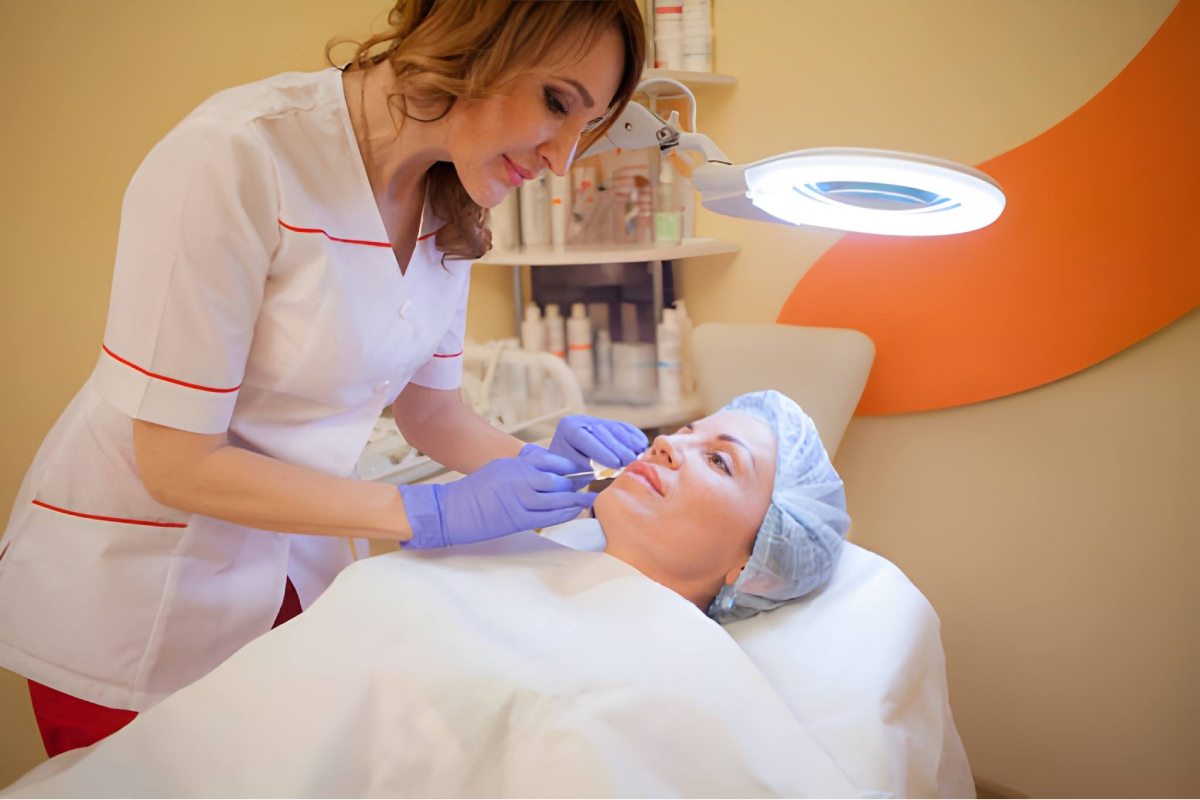
The worlds of beauty treatments and medicine are increasingly merging. Walk down any street and a beauty professional will offer you massages, fillers, laser hair removal and teeth whitening. Some feel pretty comfortable in the relaxed atmosphere of a beauty salon; others do not. For example, it is commonly accepted that a failed haircut heals over time; Poor facial care can cause itching, but it’s not fatal. But a sour filling can be deadly, and you don’t have to be a doctor to realise when it’s failing.
When Beauty is Biological
However, there is a difference between topical application and more invasive biological procedures that alter tissue, chemical composition, or structure; there are reasons some chemicals, as well as all needles, are unavailable to the average beauty professional. As cosmetic procedures become more exploratory and transformative, assessing the biological and chemical makeup of the body, they are better suited to professionals with medical backgrounds. Specific values imply a result – beauty treatments.
The dentist can close these soft tissues. The cosmetic dentist learned how to apply the gel. A cosmetic teeth whitening specialist who has taken a weekend course? He knows how to use it. And point. This already raises serious concerns if one does not know what one does not know.
It’s all about education.
But most people don’t know that earning a certificate in addition to a specialist certification in aesthetic dentistry with basic training requires not simply taking a few courses, but years of specialised training in anatomy, physiology, pathology, and complication evaluation. When the best professional teeth whitening dentist assesses your gel application needs, they focus on more than just color change; They examine the entire oral cavity: the soft tissues, the condition of the enamel, any other problems in the mouth (bleeding) or decay, as well as what other examinations (medications) show externally (older patients generally require less whitening, unless established limits). While a beauty treatments with basic training knows how to perform the procedure in a controlled environment (a salon), a professional with a medical background understands the correct application technique and has experience to draw on in case of complications.
The point is not that professionals can ignore conscious choice; instead, the areas become more specialised through experience and hypotheses gained in relevant situations.
Standards vary.
Additionally, difficulties in areas of beauty treatments that require specialised training arise when legal protections do not provide proper access. Teeth whitening is supposed to be a medically regulated procedure, but in many regions it is not, which means businesses without qualified staff to assess health concerns may be treating people who may not achieve the desired results.
But it is allowed, and teeth whitening is one of the most common procedures performed without a dentist’s involvement, although it is known that in other medical facilities, it can cause more harm than good. However, legality does not mean safety; Chemical peels are regularly performed outside medical centres; fillers are offered without a medical record; laser treatments are available anywhere (invasive chemicals (chemical peels) or needles that scrape the skin (fillers, tattoos)). One would think that professionals should know better, but the law doesn’t always agree.
What happens when something goes wrong?
And what else? Unforeseen circumstances arise all the time. Complications appear, as they should in theory, but they also occur frequently because of work performed by professionals without a medical card. Teeth whitening, in particular, can be challenging, as it is not uncommon to see a person walking down the street after a whitening procedure with burns to the gums or cheeks due to an overly strong gel or improper application.
Enamel thinning is irreversible; sensitivity persists; excessive gum bleeding complicates existing problems (deep scratches). It would seem to be common knowledge, but under the pretext of beauty treatments and life transformation, industry professionals should have known better, not to mention those who have tried it.
Why not see a professional?
But why do people try to do this? Because medical professionals charge more than beauty salons, and while there may be slight differences depending on professionalism, health condition, or deductible size, in most cases, it ends up being expensive.
It’s a shame; after all, these are real monetary bonuses, plus downtime, as the pain from poorly performed services affects your appearance, creating additional internal stress on top of the cost.
Not all procedures meet the requirements.
If in doubt, check your qualifications. Any certified professional will appreciate your interest in exploring your academic career, whether or not you have a certificate. A verified source is better than one that tries to sell you something cheap, as this can lead to subsequent missed payments that aren’t worth it.
Conclusion
Cosmetic procedures affecting body tissue or using chemicals that could cause harm, with the potential for secondary damage resulting in severe. It’s not about elitism or restrictions; it’s about health and safety.
Your body is not an object of experimentation. Although it may seem redundant, it is better to prevent a problem than to regret it later when too many people suffer real injuries or respond poorly to procedures. As this is not training compared to the medical reality that followed the onset of smallpox.
Teeth whitening? Chemical exfoliation? Injectable fillers? Any laser treatments? These procedures are unacceptable outside the hands of qualified personnel within reputable organisations. Still, in most cases, the best option is a well-informed professional with detailed knowledge in their field. For persons under the age of 18. Even if you want to justify using the understanding of others. Therefore, those who do not have the appropriate certification should not do so.