

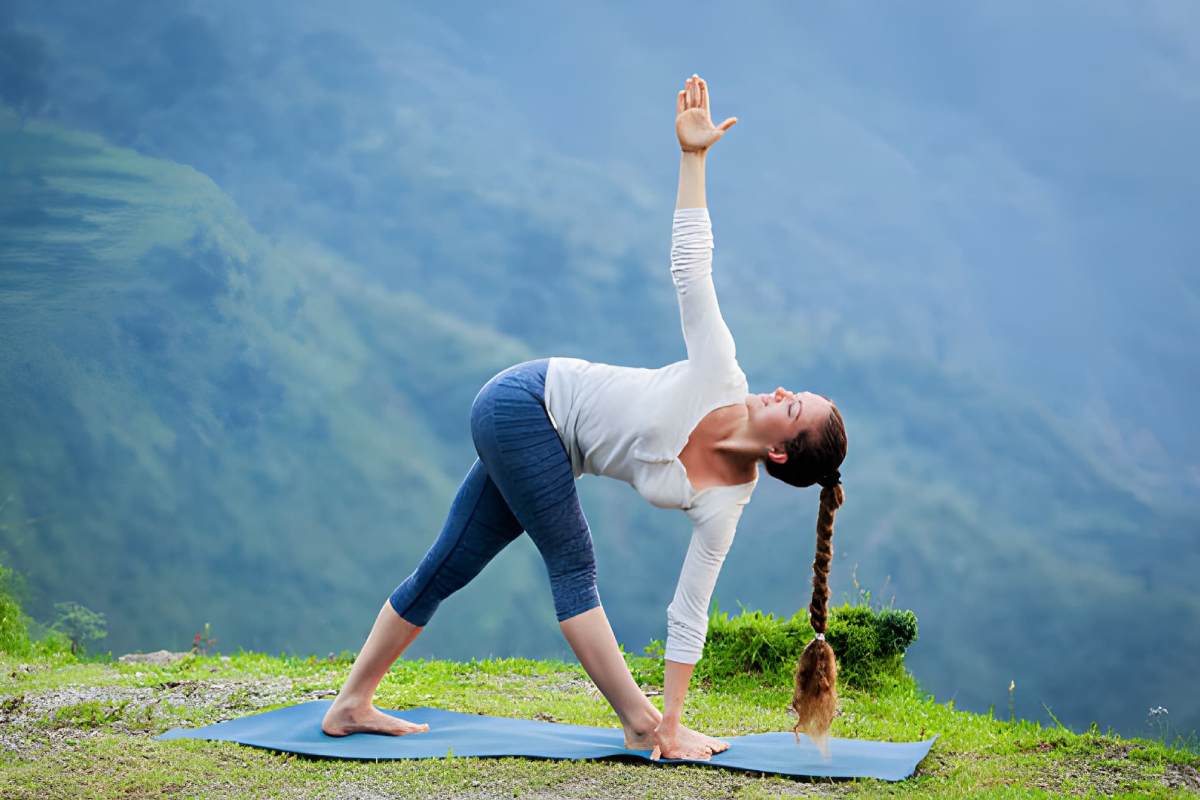
In ancient India, yoga positions began as a spiritual practice designed to bridge the gaps between the mind and body. While the purpose of yoga positions remains the same today, people worldwide use this culturally rich practice to relax, relieve stress, and even improve sleep, making it more versatile than just a daily exercise routine.
If you have trouble drifting off to sleep, yoga can be an easy and accessible way to boost your endorphin and cortisol levels with a few simple practices. To better understand bedtime yoga, we asked yogis and fitness experts about their favourite yoga positions for getting the best night’s sleep.
The Connection Between Bedtime Yoga and Better Sleep
When it comes to falling asleep, yoga positions give your energy somewhere to go, says Lindsay Monal, a yoga instructor and Reiki master. “Moving during the day helps balance your energy so you don’t feel restless at night and toss and turn in bed,” she explains. “
Regular yoga positions will help you enjoy a more profound, more restful sleep.” You may go to bed with your adrenaline pumping, still recovering from the day’s energy. Taking minutes before bed to practice the yoga poses below will help you fall asleep quickly and stay asleep, virtually without interruptions.
Supine Spinal Twist
“Lie on your back, then roll onto your side, bending your knees toward your stomach, being careful not to round your back,” says Christopher Norman, a certified nurse practitioner and yoga positions instructor.
Use one hand to hold your knees, allowing your shoulders to roll back to touch whatever you’re lying on.” This pose will aid digestion, relieve tension in the spine, and promote relaxation before you get cosy under the covers.
Reclining Bound Angle Pose
“This pose opens the hips, groin, and chest, which promotes relaxation in the lower body,” says celebrity trainer and fitness consultant Jay Cardiello. “It stimulates the parasympathetic nervous system, which lowers your heart rate and promotes relaxation.”
The pose involved lying on your back with the soles of your feet together and your knees spread apart. Stay in this position for five minutes, breathing deeply and slowly.
Legs Up the Wall Pose
“End your day by lying on the floor with your legs up against the wall,” says Norman. “This pose can helps relieve lower back pain, calm your nerves, improve circulation to the brain, and reduce anxiety, preparing you for a good night’s sleep.”
The pose sounds like this: Lie on your back with your legs extended, leaning against a nearby wall. Staying in the L shape, focus on relaxing your back and legs, holding the pose for up to 10 minutes.
standing forward bend
“This gentle inversion helps calm the mind and stretch the hamstrings and back, which often hold a lot of the tension in our bodies,” says Monal. Start by standing a few inches from the wall, moving forward from your hips (you can bend your knees as much as you like!).
Once you’re in a hanging position, reach for your opposite elbows and move from side to side for two minutes, breathing deeply.
broken wing pose
“The shoulders are another big area of stress and tension in the body,” explains Monal. “This pose helps open the chest and allows the breath to flow more easily through the body.” Start by lying face down with your arms folded into a T shape, palms down; twist to one side, opening your shoulder and keeping your opposite arm in front of you.
For an even deeper stretch, “keep your legs together in a fetal position, or place your top leg behind the other,” suggests Monal. Breathe deeply and hold this position for up to four minutes.
How Much Time Before Bed Should You Do Yoga?
Yoga is a great way to improve sleep, but it’s essential to time your stretching. “Ideally, after dinner, but not too close to bedtime, as this allows for comfortable digestion,” says Cardiello.
Leave an hour or two between your yoga positions and bedtime; just before bed, you can do a few quick stretches to get back into a Zen mindset.